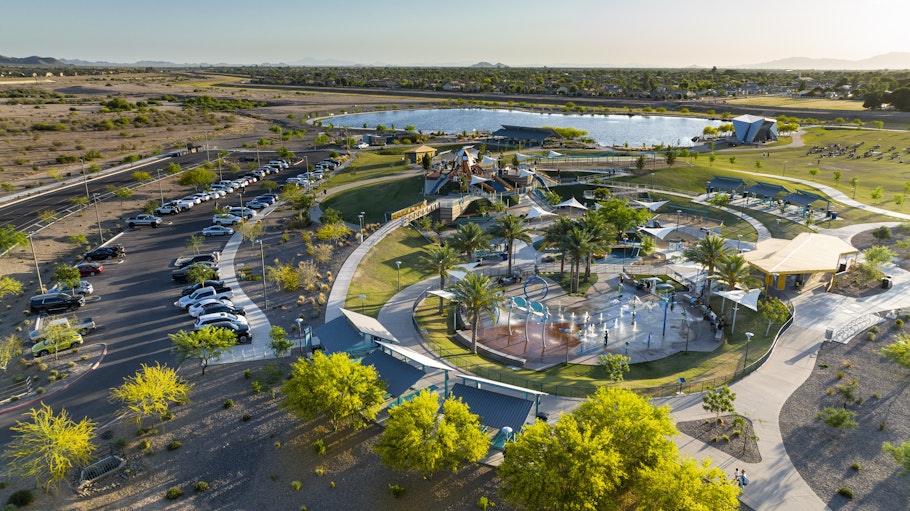
Heroes Regional Park
How do you create a park for everyone in a hot, growing desert city?
Heroes Regional Park combines inclusive play, connected pathways, and resilient landscape systems to serve the whole community.
Heroes Regional Park advances Glendale’s vision for a cohesive, inclusive, and climate-responsive regional park system through a landscape-driven approach unifying recreation, ecological systems, and connectivity.
Five guiding principles—sustainability, connectivity, exploration, flexibility, and inclusivity—structure the park’s design, guiding decisions from grading and circulation to program placement and materials. Connectivity served as a foundational driver. A “dynamic connector” framework organizes pedestrian movement through looped, program-loaded corridors linking neighborhoods, prior park phases, and new amenities. Coordinated grading, continuous pathways, and ADA access ensure seamless physical and visual connections, supporting intuitive navigation and exploration.
Landscape systems function as critical infrastructure supporting the park’s sustainability principles. Site-wide grading captures stormwater along primary circulation routes and conveys it to a central swale, providing supplemental irrigation for canopy growth and reducing urban heat island effects. Shade is treated as essential infrastructure; native and desert-adapted trees work with integrated shade structures establishing circulation routes, play areas, and gathering spaces as “cool zones.” The irrigation system uses reclaimed water from the adjacent urban lake, eliminating potable water sources and reinforcing a desert-forward landscape responsive to Sonoran Desert communities.
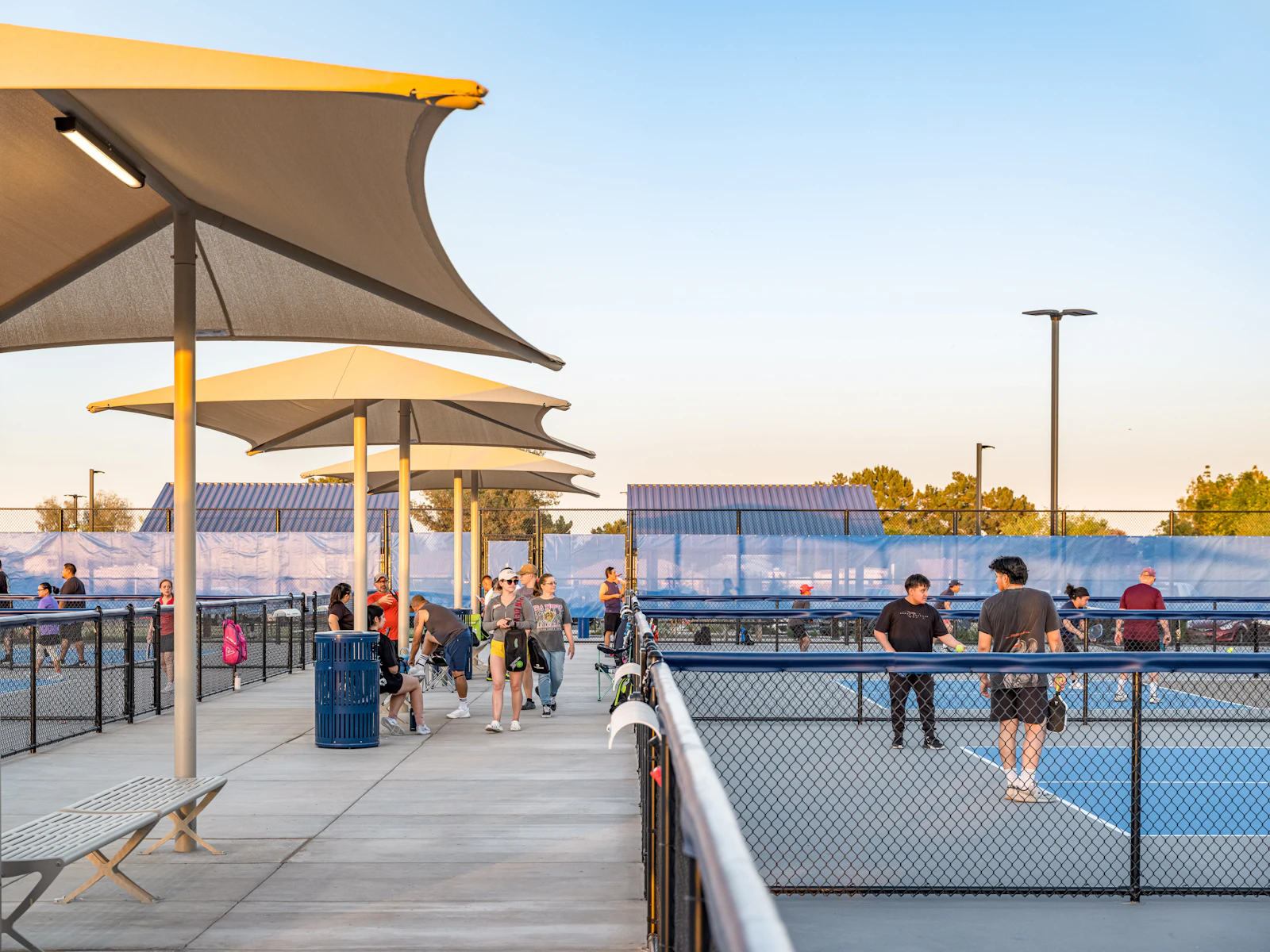
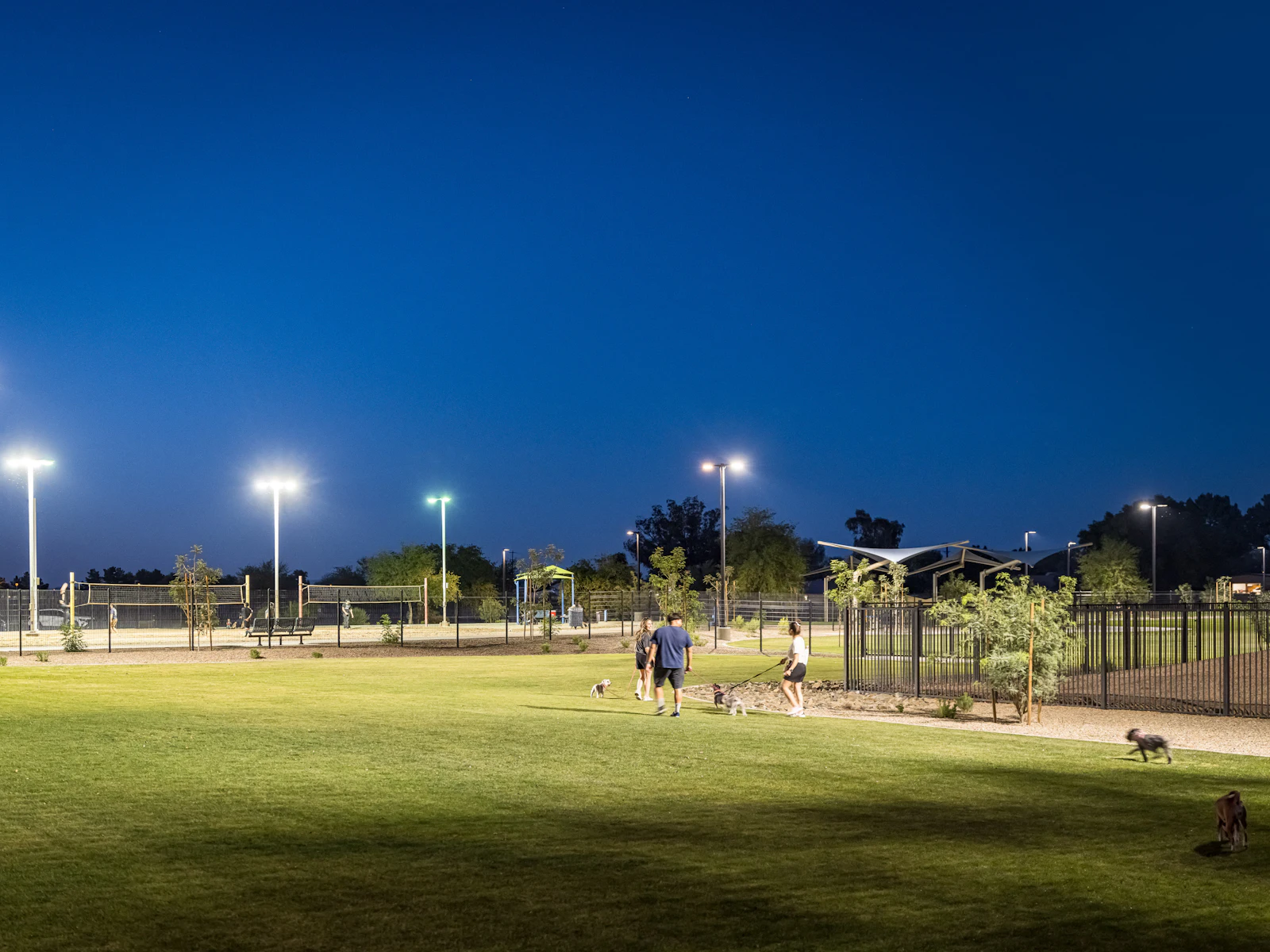
Programmatically, Heroes Regional Park delivers a diverse mix of active and passive recreation across 47 acres, including multi-use fields, open lawns, pickleball courts, a mini-pitch, dog parks, and ramadas. The park features Glendale’s first municipally owned artificial turf sports field, reducing water demand while increasing playability. More than 800 trees and thousands of drought-tolerant shrubs define spaces, enhance comfort, and frame views, while continuous ADA access ensures equitable use of amenities.
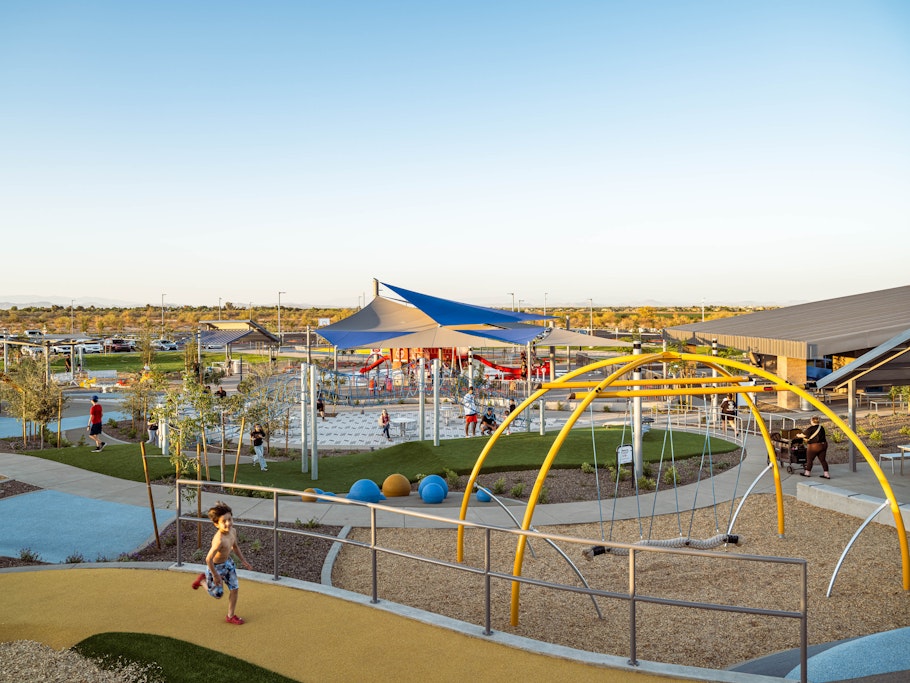
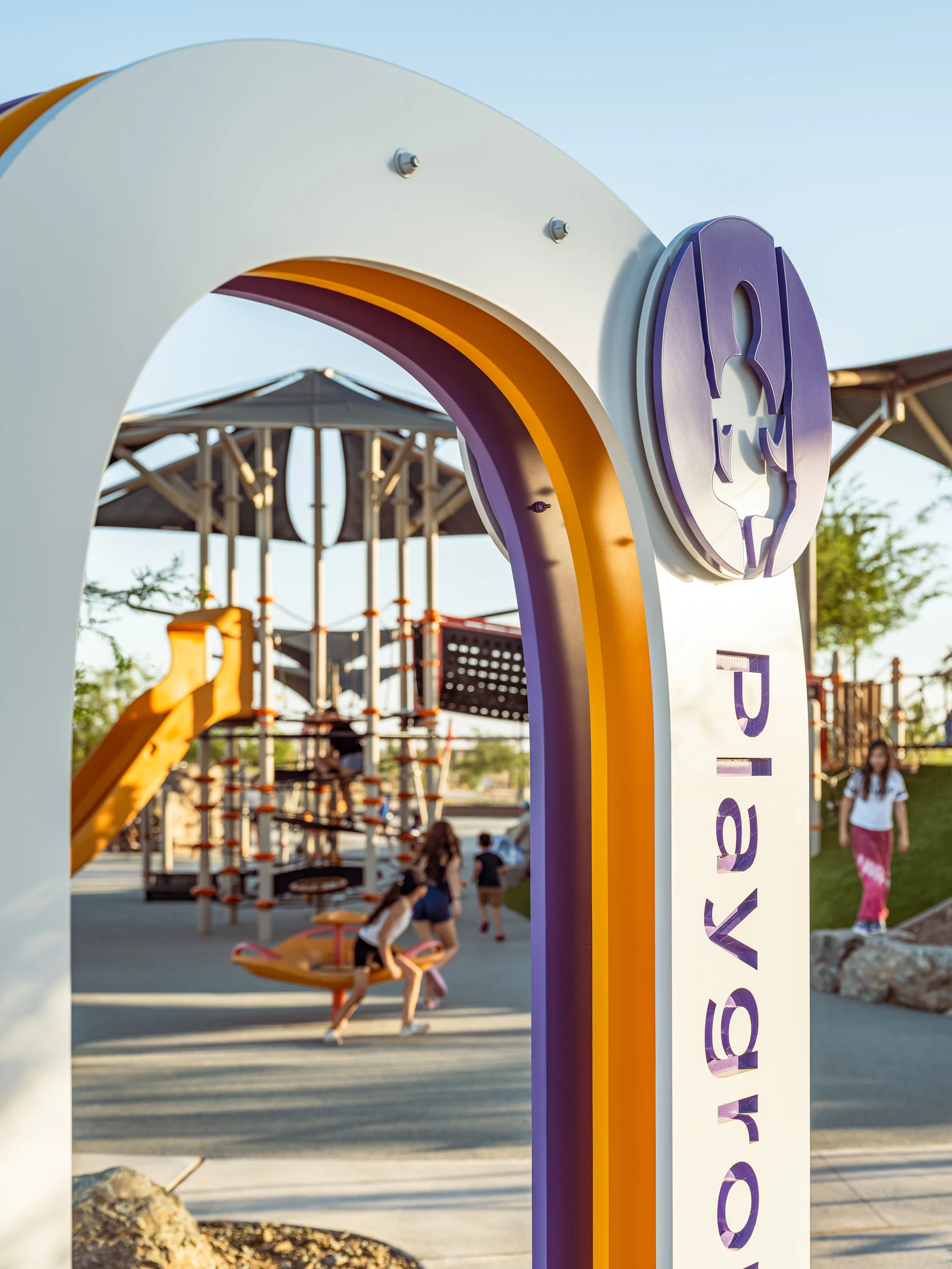
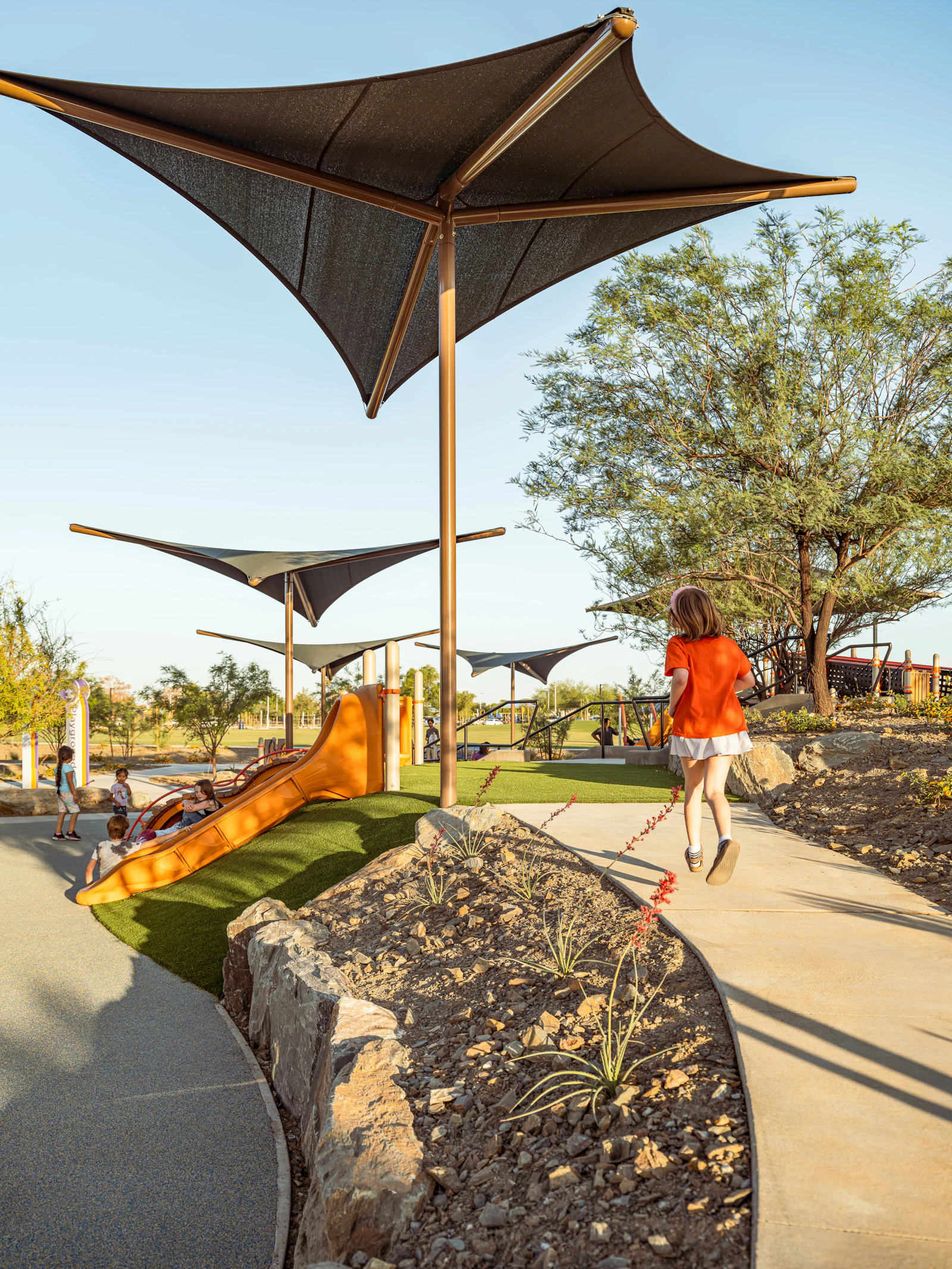
Exploration, inclusivity, and sustainability shape the play experience, organized around the theme of a “Playful Arroyo.” Collaborative grading strategies position the playground between a landscape-integrated play embankment to the west and the park’s central swale to the east, using landform and hydrology to create an immersive play environment reinforced by strengthened shade canopies. Enhanced surfacing, ADA access, integrated shade, and sensory-rich play elements support a wide range of physical, cognitive, and social play, creating a welcoming environment for children and caregivers of all abilities. Together, these elements reinforce Heroes Regional Park as an inclusive, high-performing civic landscape.
-
Location
Glendale, AZ
-
Client
City of Glendale Arizona
-
Awards
2026 AZ ASLA Honor Award
-
Collaborators
Architekton
BDA Design
Lloyd Sports + Engineering
Marc Taylor
Ninyo Moore
Thinking Caps Design
Wright Engineering -
Photography
Jason Roehner
-
Size
47 acres
-
Region
Southwest
-
Project Type
Park
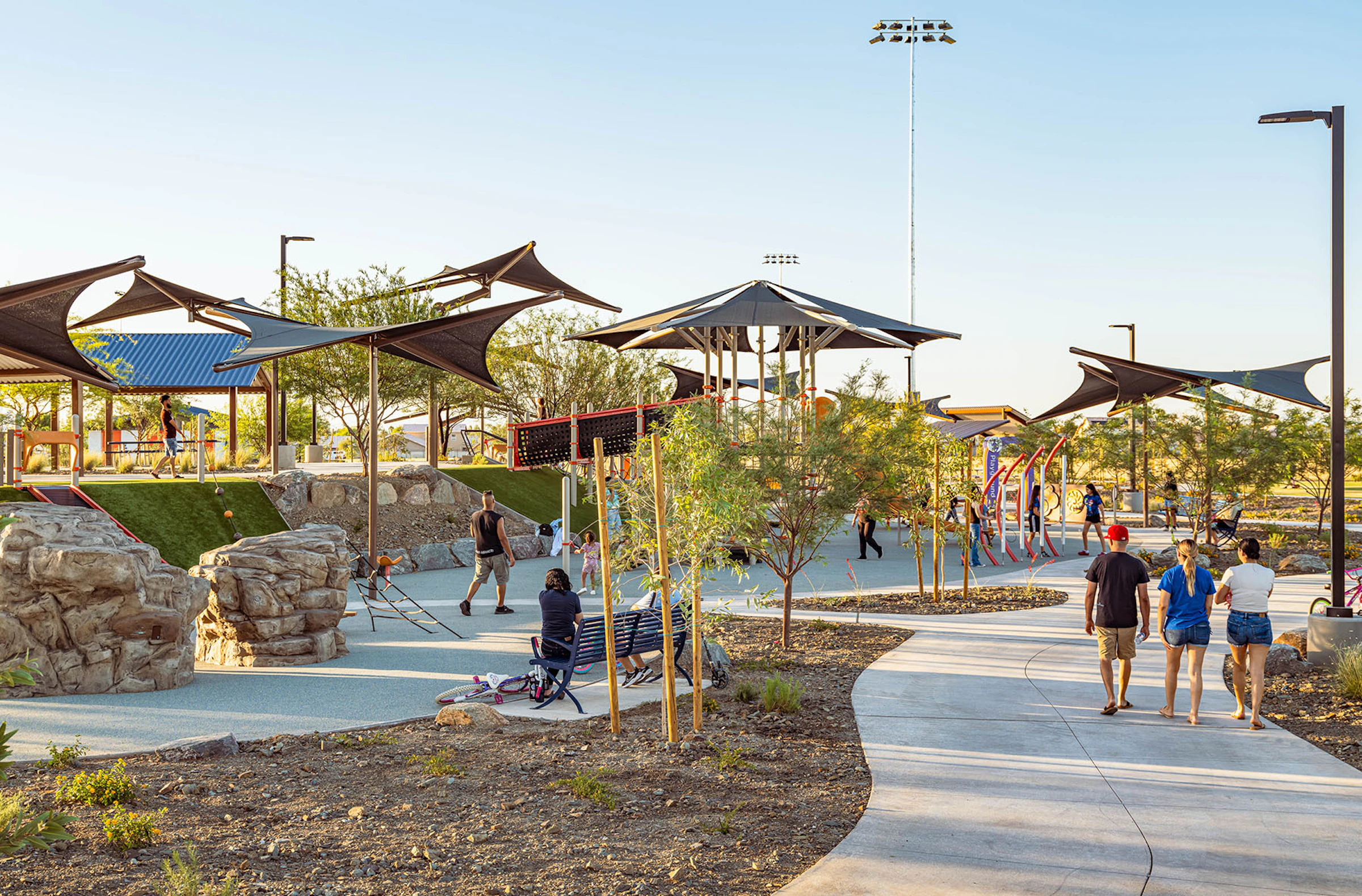
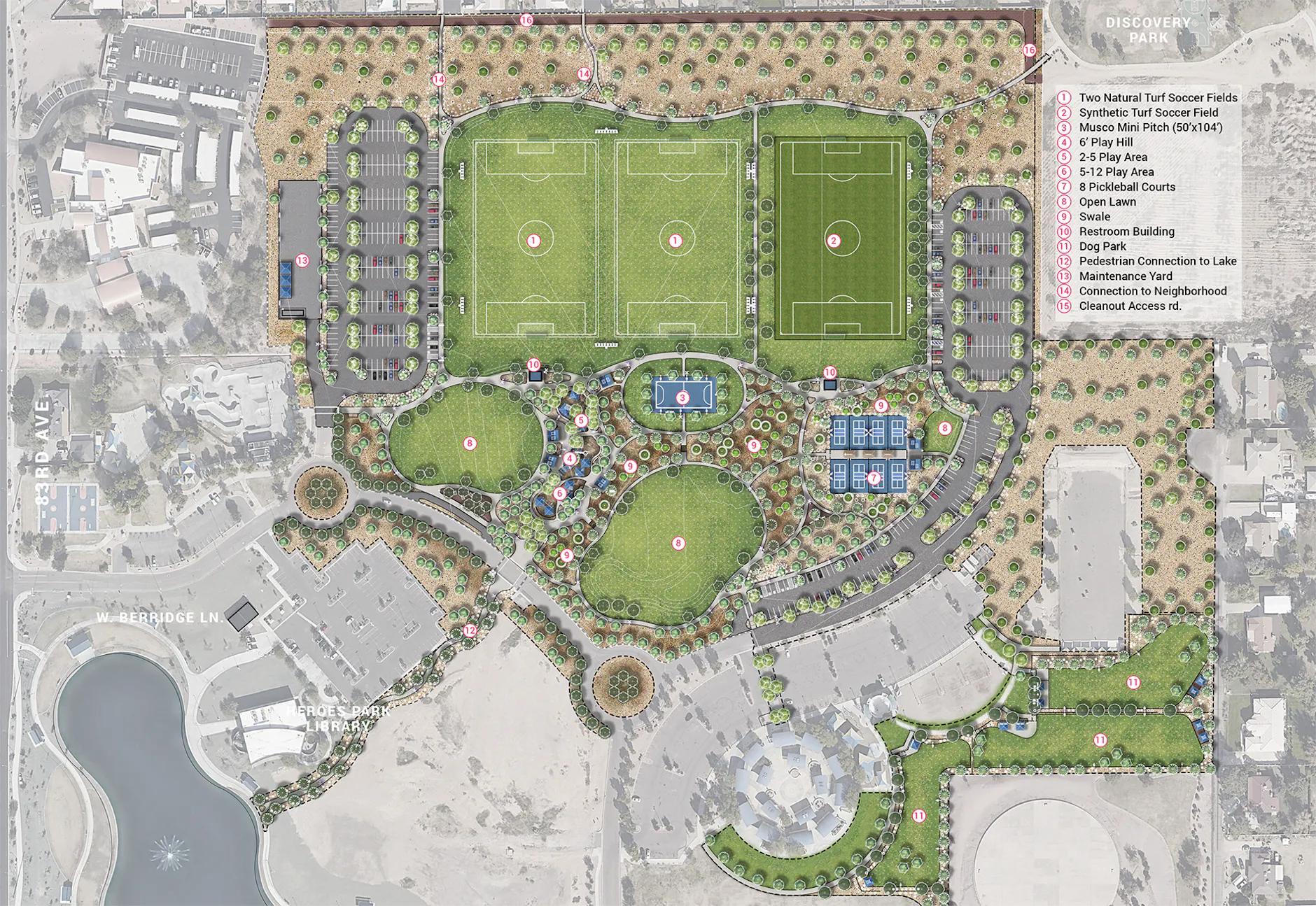


Connectivity: Connectivity drives the park’s organization, with looped, program-rich pathways linking neighborhoods, earlier park phases, and new amenities through a continuous, intuitive circulation framework..
Landscape Systems: Grading strategies capture stormwater along circulation routes, conveying flows to central swales that support desert-adapted planting, enhance comfort, and reinforce long-term ecological performance..
Mini-Pitch: A compact, multi-sport mini-pitch offers an approachable, contained play environment, expanding recreational access and introducing a first-of-its-kind program to Glendale’s park system..
Playful Arroyo: Landform and hydrology shape the Playful Arroyo, positioning the playground between sculpted embankments and central swales to create an immersive, landscape-driven play environment..