Designing for Belonging: Willow Bend Park
A recent feature in Parks & Recreation Magazine highlights how Willow Bend Park redefines access—shaping a landscape where people of all abilities can move, play, and connect together.
A new national feature by Will Coleman spotlights Willow Bend Park and Natural Area in Loveland—a project grounded in a simple but powerful idea: access for all is not an add-on, but the foundation of great design.
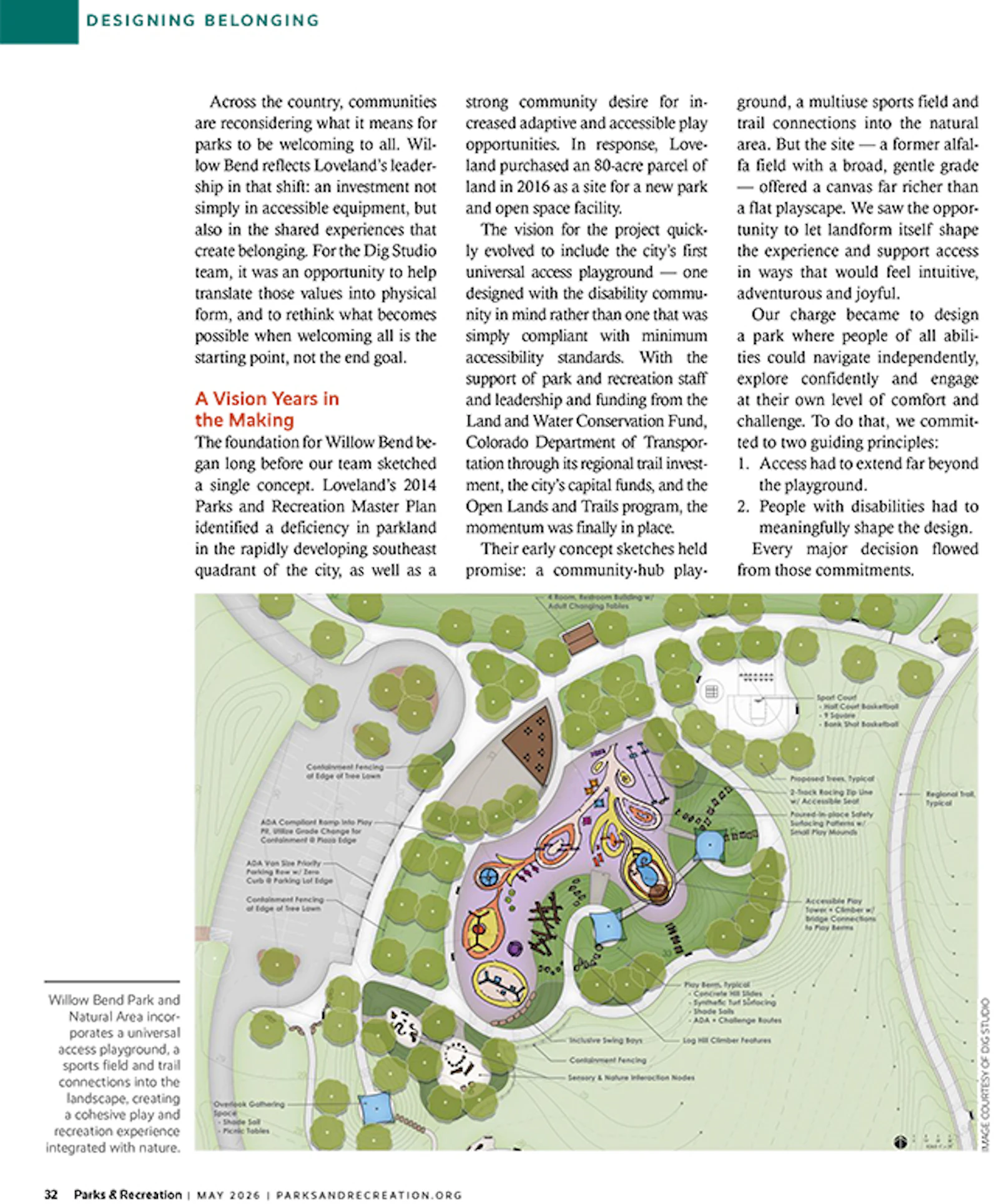
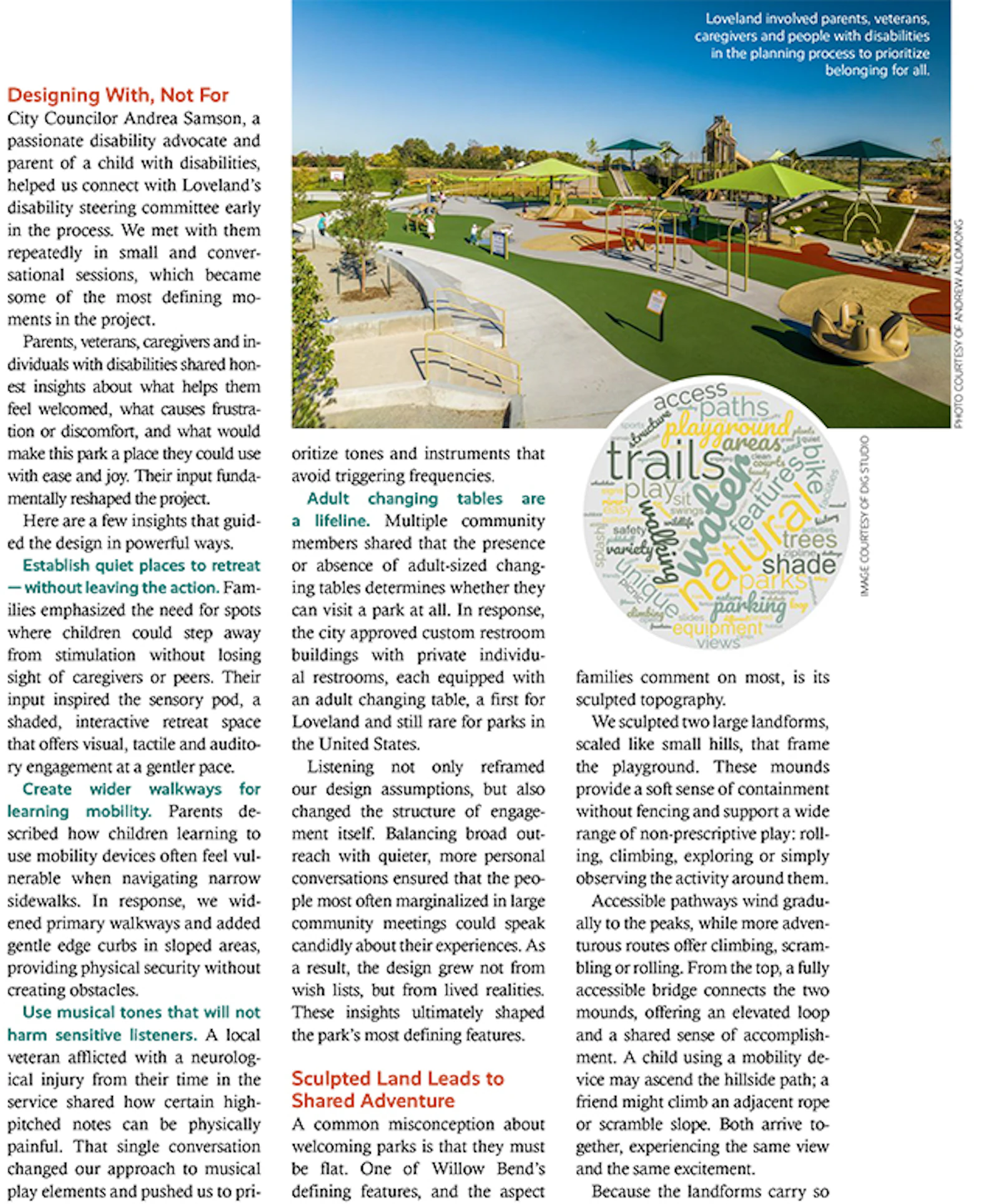
At Dig Studio, this project challenged us to move beyond conventional notions of accessibility and instead design a park where belonging is built into every experience. From the outset, we worked closely with the disability community—listening, learning, and allowing real lived experiences to shape the design in meaningful ways.
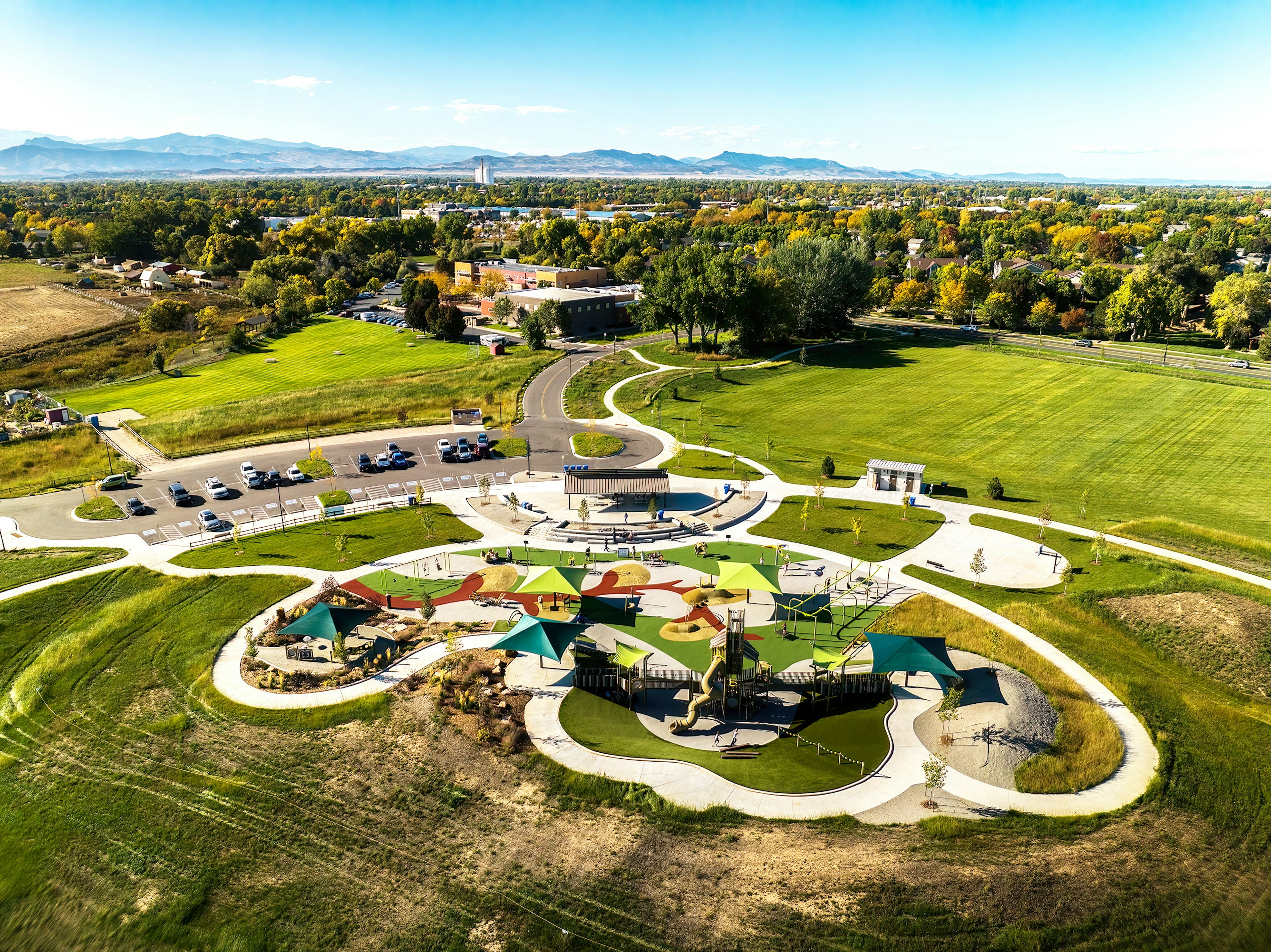
The result is a landscape where access extends far beyond the playground. Sculpted landforms replace flat, prescriptive spaces, creating shared moments of exploration and achievement. Pathways, play elements, and gathering spaces are designed to support independence, choice, and connection—allowing people of all abilities to navigate the park on their own terms.
Small but critical decisions make a big impact: wider walkways that support mobility learning, sensory retreat spaces that offer calm without isolation, musical elements tuned for comfort, and inclusive amenities like adult changing tables that expand who can fully participate in public life.
Willow Bend also demonstrates that universal design benefits everyone. Families, caregivers, children, and older adults all experience a park that is more intuitive, flexible, and welcoming. The landscape itself becomes the play system—encouraging movement, discovery, and shared adventure.
As highlighted in the article, this project reflects a broader shift happening across the country: communities are rethinking what it means to design for inclusion. Willow Bend shows what becomes possible when that mindset leads from the very beginning.
More than a destination park, it is a place shaped by community, grounded in empathy, and designed for everyday moments of connection. Read the article here
-
Date
May 01, 2026
-
Tags
Thought Leadership, Project

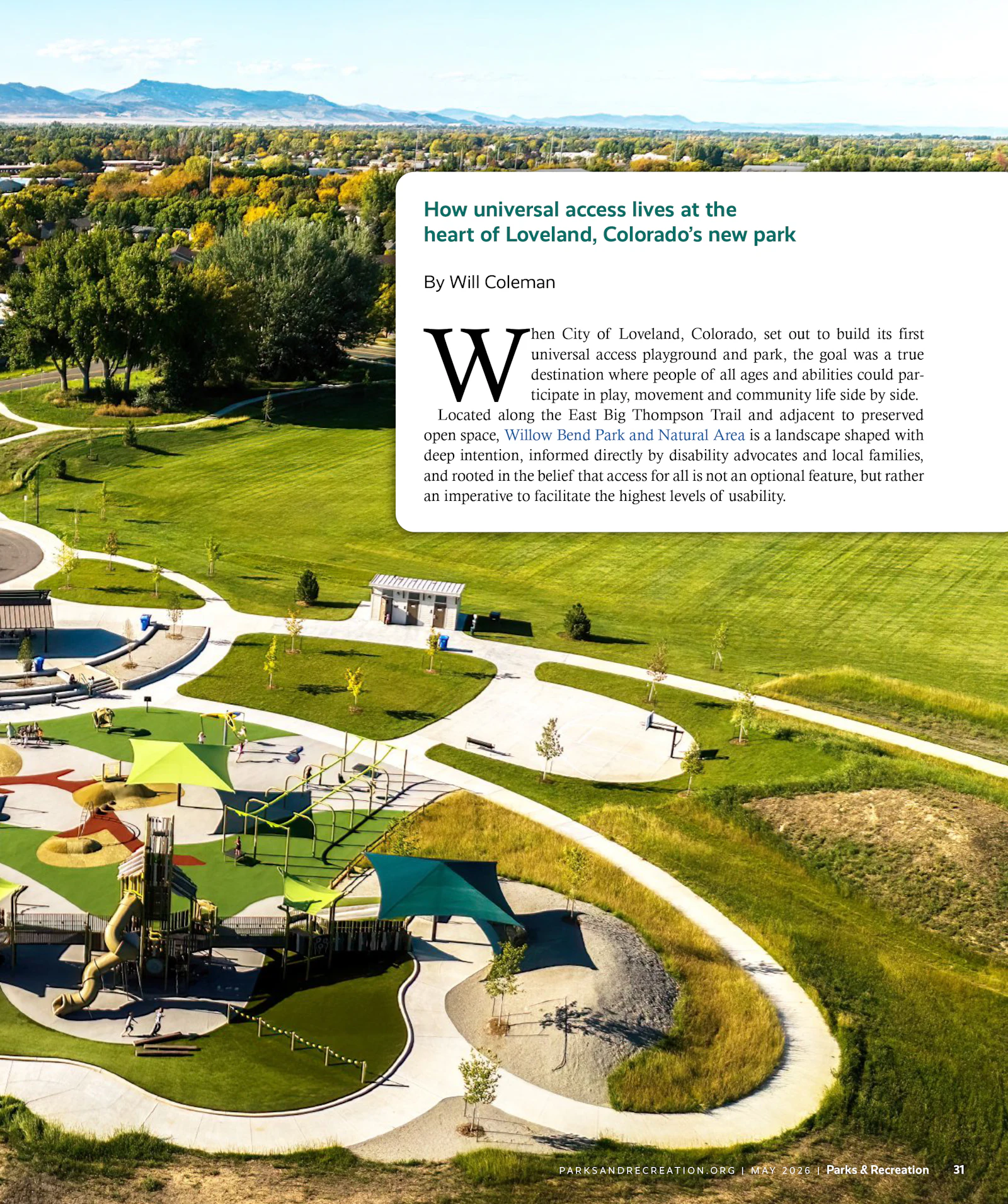


Shaped for inclusion: Sculpted landforms and looping paths create a continuous play experience where people of all abilities move, explore, and connect together.
Movement made intuitive: Wide, gently curving paths and shaded pauses support independence, comfort, and confidence for visitors navigating the park in different ways.
Shared adventure: Elevated play structures offer varied routes and challenges, allowing children of all abilities to engage side by side.
Topography as play: Hills become destinations—supporting climbing, rolling, and accessible routes that bring everyone to the same moments of joy.
Play for all: Inclusive swings create opportunities for shared experiences between caregivers, friends, and children of all abilities.